Gaskets for Electronics
The Shielding Solution: A Guide to Choosing RFI and EMC Gaskets
In our hyper-connected world, electronic devices are packed closer together than ever before. With components shrinking and frequencies rising, electronic enclosures face an invisible but chaotic enemy: Electromagnetic Interference (EMI) and Radio Frequency Interference (RFI).
Without proper protection, electronic systems can suffer from signal degradation, data corruption, or total system failure.
The frontline defence against this interference? RFI and EMC gaskets.
What are RFI and EMC Gaskets?
Key Material Categories
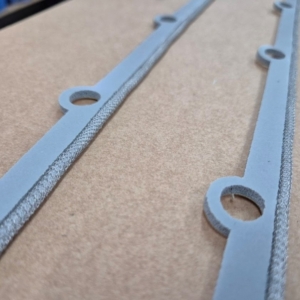
1. Conductive Elastomers
- Best for: Applications requiring a combination of high EMI shielding and an environmental seal (protection against dust and water ingress).
- Common Use: Military communications, aerospace systems, and outdoor telecom towers.
2. Wire Mesh Gaskets
- Best for: High-level shielding at a lower cost, especially where environmental sealing is not a priority.
- Common Use: Heavy industrial machinery and commercial electronic cabinets.
3. Fabric-over-Foam (FoF)
- Best for: Low-closure-force applications where heavy compression could deform thin plastic or metal enclosure walls.
- Common Use: Laptops, servers, medical displays, and consumer electronics.
4. Beryllium Copper (BeCu) Fingerstock
- Best for: High-cycle applications where doors, panels, or drawers are frequently opened and closed.
- Common Use: Data centre rack enclosures and shielded testing rooms.
Critical Factors for Selecting a Gasket
- Shielding Effectiveness (dB): Identify the target frequency range of your device. Different materials perform better at specific frequencies (e.g., GHz range vs. MHz range).
- Compression Force: Soft foams require very little pressure to seal. Loaded elastomers require significant clamping force to ensure proper electrical contact.
- Galvanic Compatibility: Ensure the metal particles in your gasket closely match the metal of your enclosure. Mismatched metals in humid environments cause galvanic corrosion, destroying the electrical bond over time.
- Environmental sealing: Determine if your device needs an Ingress Protection (IP) rating. If it must withstand rain or pressure washing, a conductive elastomer is mandatory.
Conclusion
With experience dating back to the 1970’s, EAS today are working hard to win business from the Electronics sector, both here and overseas.
From simple dash-cams, internet routers and phone systems, through to drones, satellite systems, and electronic defence – we intend to be working with the best !