Spiral Wound Gaskets and other Metallics
Choosing the Heavy-Duty Seal: Spiral Wound vs. RTJ Gaskets
In high-pressure, high-temperature industrial piping, standard flat gaskets simply cannot hold up. Engineers and maintenance teams rely on two heavy-duty, semi-metallic solutions to prevent catastrophic leaks: Spiral Wound Gaskets (SWGs) and Ring Type Joint (RTJ) Gaskets.
While both are built for extreme environments, they feature entirely different designs, sealing mechanisms, and flange requirements.
The Resilient Workhorse: Spiral Wound Gaskets (SWG)
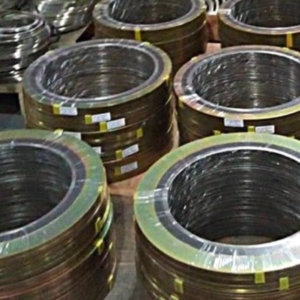
Spiral wound gaskets are constructed by winding alternating layers of V-shaped metal strips (typically stainless steel) and soft filler materials like flexible graphite or PTFE.
- How They Work: The V-shaped metal structure acts like a mechanical spring. When the flange bolts are tightened, the gasket compresses. This spring-like design allows it to dynamically adjust and maintain a tight seal during thermal expansion, contraction, and pressure fluctuations.
- Flange Type: Designed primarily for standard Raised Face (RF) flanges.
- Best For: Pipeline flanges, chemical processing lines, and steam systems with frequent temperature cycles.
The Solid Fortress: Ring Type Joint Gaskets (RTJ)
RTJ gaskets are solid, precision-machined metallic rings. They are typically made from soft iron, low-carbon steel, or alloys like Stainless Steel 316 and Monel, and are available in oval or octagonal cross-sections.
- How They Work: Instead of using a soft filler, RTJ seals rely on metal-to-metal contact. The solid ring is placed into a deep, machined groove on the flange face. As the bolts are tightened, the high compressive force plastically deforms the softer gasket metal directly into the harder flange groove, creating an incredibly tight, permanent seal.
- Flange Type: Strictly requires specialized Ring Type Joint (RTJ) flanges with machined grooves.
- Best For: Upstream oil and gas production, offshore drilling platforms, and extreme-pressure refinery systems.